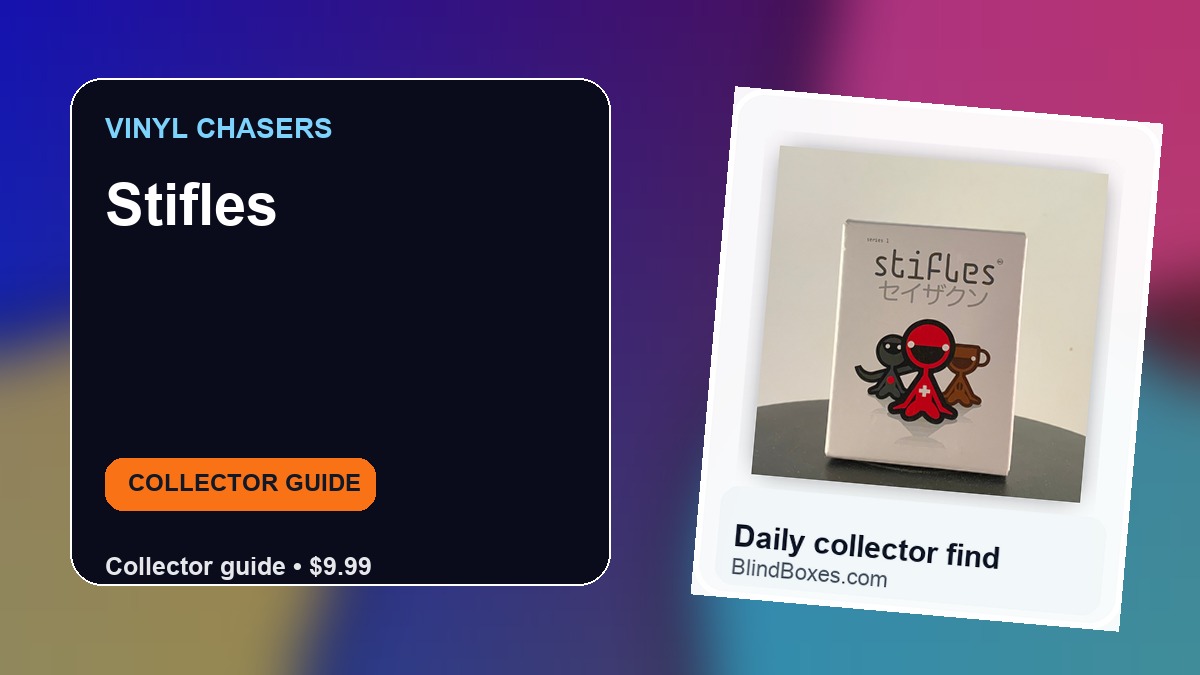
Stifles are easy to recognize even before you identify a particular design: every character is permanently down on its knees. That shared pose is the point of the series, not a limitation of articulation. The original product story describes the creatures as silent observers that spend their time kneeling in coffee bars, windows, shop displays, and other public places, watching human activity and absorbing pieces of human culture.
Swiss designer Lopetz created the characters for Büro Destruct. An archived Büro Destruct shop page dates the product to April 2008, calls this the first series, and describes a limited-edition vinyl toy measuring approximately 60 × 30 mm—about 2.4 × 1.2 inches. Each figure came in a blind case, so the character inside was unknown until opening.
The complete eight-character Series 1 lineup
The official Stifles product material identifies eight designs: Afro-kun, Ambulan-kun, Bone-kun, Kohi-kun, Nappie-kun, Ninja-kun, Spy-kun, and Suisu-kun. The “-kun” ending is part of each printed name. That matters when cataloging loose pieces, because informal descriptions can easily replace the actual names—especially Ambulan-kun, whose name may be misread on small package photos.
- Afro-kun uses an oversized rounded hairstyle as the dominant silhouette.
- Ambulan-kun carries the emergency/medical theme in the head design.
- Bone-kun is the skeletal member, with bone and skull-style graphics.
- Kohi-kun is the coffee-themed figure, fitting the line’s coffee-bar origin story.
- Nappie-kun turns the shared crouched pose into a sleepy, bedtime-oriented character.
- Ninja-kun wears the clearest character costume, with a masked ninja look.
- Spy-kun uses a covert-agent theme rather than a radically different body shape.
- Suisu-kun is the Swiss-themed design, connecting the set back to Büro Destruct’s home country.
The underlying sculpt stays remarkably consistent across the assortment: big rounded head, tiny hands and feet, and that low kneeling posture. Identity comes from headgear, face treatment, printed graphics, and color. The archived catalog specifically says the figures appeared in different colors, so color alone is not a safe way to identify a character or declare a variant. Start with the printed motif and silhouette, then record color as a separate variation.
What the packaging tells collectors
The box art is more informative than it first appears. The front establishes the Stifles name and blocky graphic style, while the side and back panels show the lineup and preserve the individual character names. For a loose figure without its box, those panels are the best checklist reference. For a sealed example, the package is also part of the display: sharp corners, intact top and bottom flaps, clean printing, and the absence of crushing or moisture marks all affect how well an older blind box presents.
A sealed box does not identify the figure inside. That uncertainty is authentic to the original blind-case format, but it also means collectors should be cautious with any seller claiming a specific character in a factory-sealed box unless there is separate case-mapping evidence. An opened box with the original insert can be more useful than an unverified “identified” sealed box when the goal is accurate cataloging.
Are there Stifles chasers or printed odds?
The surviving Series 1 package photos and the archived official product pages present eight characters, but they do not publish per-character odds, identify a secret, or designate an official Chase. That makes “eight to collect” the evidence-based checklist. A color treatment may be less common in the aftermarket, but scarcity alone does not turn it into a documented chaser. Until a case sheet or manufacturer source establishes rarity, treat colorways as variations with unknown distribution rather than assigning invented odds.
Why Stifles still stand out
Many blind-box lines build a cast by placing unrelated costumes on a neutral mascot body. Stifles begin with a stranger narrative constraint: every creature is a motionless observer. The coffee, ninja, skeleton, spy, medical, sleepy, Swiss, and afro designs feel like bits of human culture filtered through that same quiet species. At only 60 mm long, the figures also form a compact display; the repeated kneeling profile gives a complete group a deliberate rhythm instead of looking like eight disconnected miniatures.