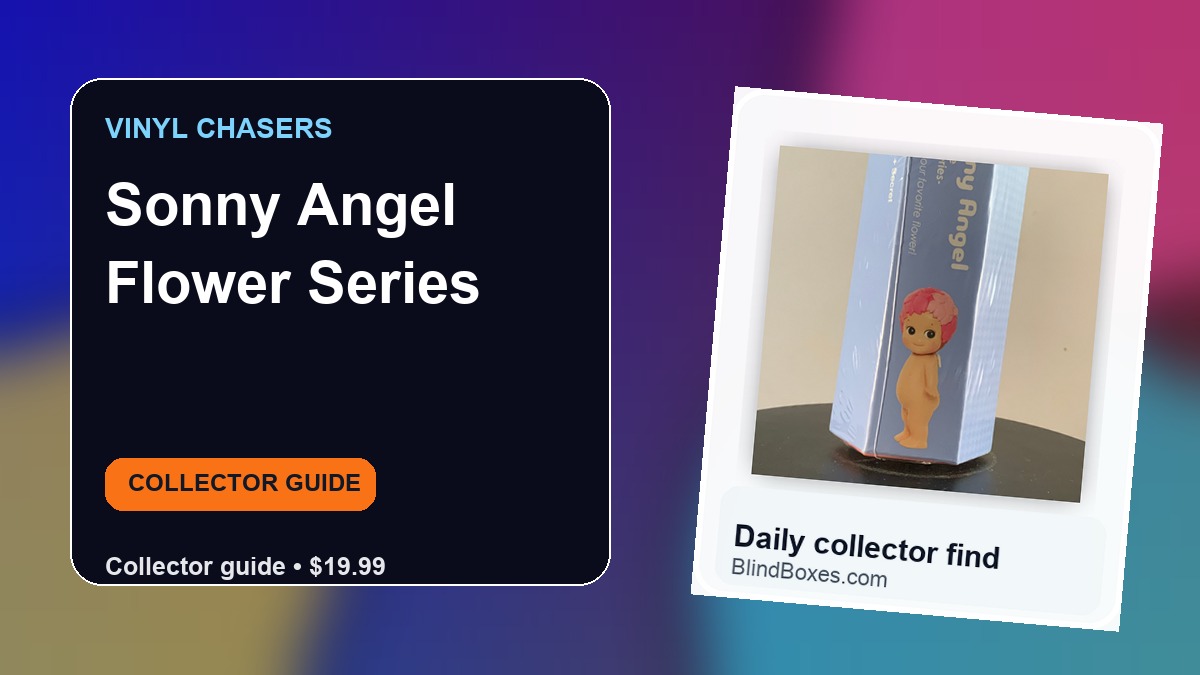
Sonny Angel Flower Series is one of the brand’s long-running regular assortments, but not every Flower Series box represents the same production design. This sealed example uses the older blue packaging and the pre-refinement character lineup associated with the series before Dreams updated Flower Series in 2019. BlindBoxes dates the package to around 2014, making it especially interesting to collectors who distinguish original regular-series boxes from later refinements rather than treating every Flower box as interchangeable.

The 12-figure original lineup
The side panel is unusually useful because it names and pictures every standard pull: Rose, Tulip, Poppy, Dandelion, Cactus, Morning Glory, Lily Bell, Hydrangea, Pansy, Cherry Blossoms, Carnation, and Acorn. The front also states “12 kinds + Secret.” That means one unopened box contains one randomly selected mini figure from a pool of 12 disclosed standards, with an additional secret design possible; it does not contain the complete lineup.
Dandelion is a particularly helpful identification cue. On the official Sonny Angel product archive, the older Flower Series gallery includes Dandelion and Cherry Blossoms alongside the rest of this package lineup. The current/refined gallery changes the mix: Sunflower appears, while the names and sculpts are presented as the newer set. Comparing the printed assortment—not merely the words “Flower Series”—is therefore the safest way to tell which generation of box is in hand.
What “refined” means for Flower Series
Dreams announced the refreshed Vegetable and Flower regular series in October 2019 under the concept “Small difference, more happiness.” Its official announcement shows the figures before and after refinement and describes the revision as the completion of a broader refinement of the regular-series range. In collector terms, this older box is not just discontinued packaging around a current item: it preserves the earlier Flower Series presentation and assortment.
The distinction matters when matching loose figures to packaging. A seller may correctly call both generations Flower Series, yet a loose refined sculpt should not automatically be paired with an original box. Check the character name, flower-head details, paint placement, and the exact lineup printed on the box before treating a figure and package as a matched example.
The secret is not a documented chaser ratio
The package confirms that a secret exists but does not print pull odds for it. “Secret” establishes an undisclosed possible design; by itself, it does not establish how frequently that figure was packed. Without a manufacturer ratio or dependable case-level documentation, it would be misleading to give this secret a numerical rarity or call it an official manufacturer Chase. Collectors may use informal chase language for genuinely short-packed pulls, but this box alone does not prove that classification.
How to assess this sealed older box
For a collectible blind box, condition includes more than whether the cardboard is present. The photographed example retains clear outer wrap, and the panels remain readable. The photos also show wrap wrinkles plus light compression or wear around some corners and lower edges. Those visible details should be weighed against the appeal of an intact older package; “sealed” should not be taken to mean flawless or mint.
Before buying any comparable example, compare all four panels with the documented lineup, look for mismatched wrap seams or opened flaps, and inspect the top and bottom for crushing. Because the figure cannot be identified without opening the blind box, the original package generation and its condition are the collectible facts available in advance.