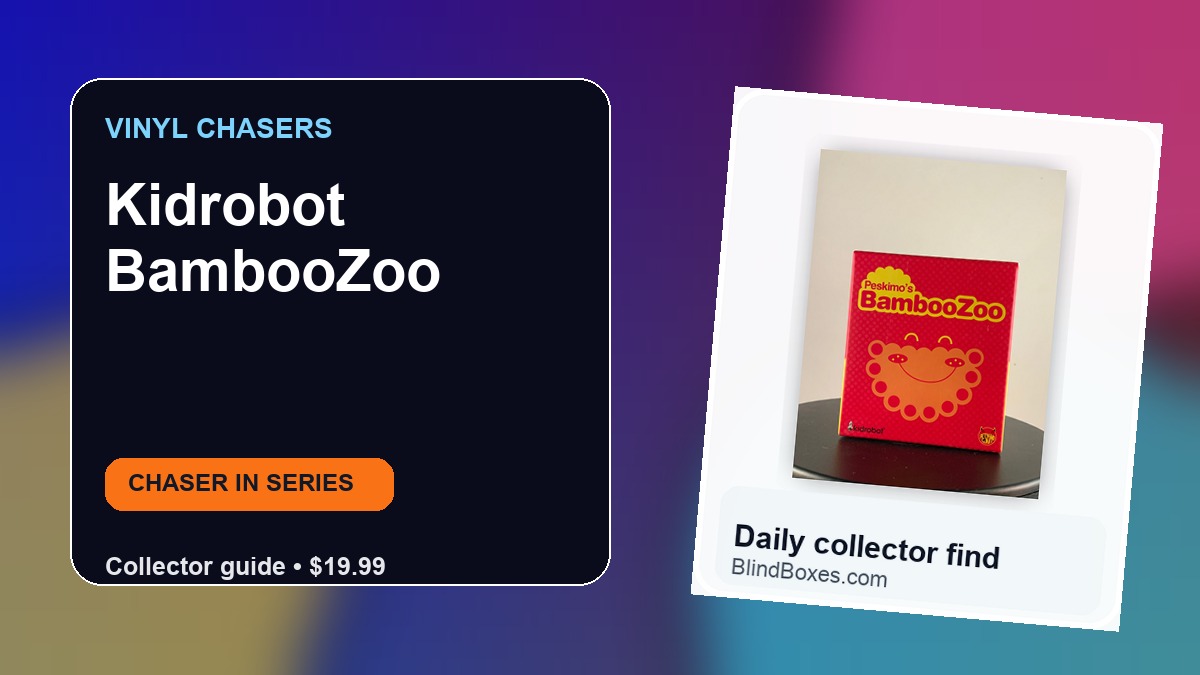
BambooZoo is a compact snapshot of Kidrobot’s 2007 designer-toy era: small vinyl creatures, loud package graphics, peculiar names, and an assortment designed around repeat pulls and genuine scarcity. Created with Peskimo, the series puts one multicolored 2-inch figure in each blind box. The character art ranges from furry beasts and rabbit-like mascots to totems and odd little monsters, giving the set a consistent illustrated world without forcing every figure onto one shared body shape.

A 14-figure zoo with two secret surprises
The package promises “14 figures plus secret surprises” and spreads the assortment across two illustrated side panels. Fourteen designs are shown in full: Jaffalhoff, O.T, Lancelot, Albie, Hobson, Punga, Papa Bamboo, Frederick, Maurice, Onsen, Captain Fritter, Tenjo Warning, Tummy Toaster (GID), and Bamboobii. Two additional slots name SkeeJee and Miss Mishka, but replace their character art and numerical ratios with silhouettes and question marks. That makes the box itself a useful checklist while preserving two visual reveals.
The assortment is broader than the phrase “14 figures” first suggests. The packaging visibly accounts for 14 revealed designs plus the two concealed characters, so a complete run can extend beyond the fourteen pictured regulars. Every pack also advertises an included sticker, an easily overlooked extra that matters when evaluating an opened but supposedly complete example.
Reading the unusual 25-box odds
BambooZoo does not use the more familiar 1/24 ratios found on many later blind-box assortments. Most of its printed odds use a denominator of 25. Hobson and Papa Bamboo are the most frequent revealed pulls at 3/25 each. O.T, Albie, Punga, Onsen, and Bamboobii are each 2/25. Jaffalhoff, Lancelot, Frederick, Maurice, and Captain Fritter are each 1/25.
Two revealed designs are scarcer still. Tenjo Warning and the glow-in-the-dark Tummy Toaster (GID) are printed at 1/50 apiece. In collector terms, those are short-packed, chase-level pulls: each has half the stated frequency of a 1/25 character and one quarter the frequency of a 2/25 design. That is a description of their documented scarcity, not a claim that Kidrobot officially branded either figure as a capital-C “Chase.”
SkeeJee and Miss Mishka require even more care. Their package slots show unknown odds, so the box does not support assigning either one a numerical rarity. It is accurate to call them secret designs; it would be speculation to rank them against the 1/50 figures without case data or a manufacturer ratio.
What collectors should inspect
For an unopened BambooZoo box, condition is part of the appeal because the package doubles as the surviving series guide. Check the red lineup panels for fading, scuffs, or sticker residue, then inspect the top and bottom flaps for creasing or evidence of reopening. A closed box is not automatically factory sealed, so rely on visible flap and seal condition rather than the word “sealed” alone.
For loose figures, match the design to the illustrated panel and verify any accessories or special finish before assigning a name. Tummy Toaster’s GID label is especially important: the glow-in-the-dark notation identifies a specific variant rather than merely a similar orange character. For a more complete opened example, look for the accompanying sticker as well as the figure and original box.
Why BambooZoo remains distinctive
The series works as more than a rarity hunt. Its strongest feature is Peskimo’s creature vocabulary: chunky silhouettes, cheerful colors, cryptic names, and just enough hidden information to make the packaging part of the experience. The official Peskimo web address now leads to Peski Studio, where Jodie and David continue to make colorful illustrated products from Bristol, while the surviving BambooZoo box preserves an earlier Kidrobot collaboration in miniature.